 Reviews


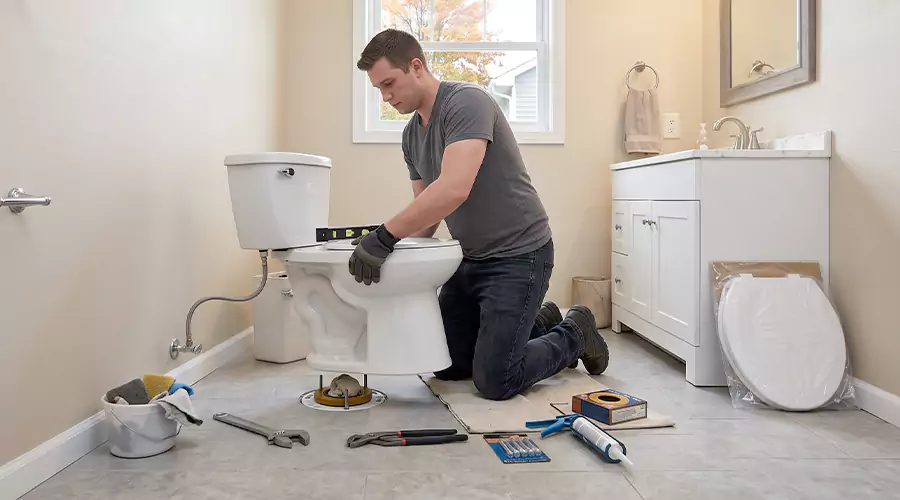
Yes. Most homeowners can handle a full toilet replacement in two to three hours with basic tools. The DIY route saves the $224 to $533 professionals charge for installation while the toilet itself costs the same either way.
Two facts decide whether you should. Toilets are heavy enough that manufacturers recommend asking for help when lifting. The rest of the job is bolts and a wax ring.
Sometimes the smarter answer is smaller. Half the reasons people replace a toilet are actually single-part repairs covered below.
Tools and Supplies
Eight items handle the entire project and most live in your toolbox already. The specialty purchases total under $25. Gather everything before the water goes off.
- Adjustable wrench for the closet bolt nuts and the supply line.
- Flathead and Phillips screwdrivers for bolt caps and the tank hardware.
- Putty knife to scrape all wax residue from the flange and the toilet outlet.
- New wax ring with bolts: Repair kits include the wax ring and new mounting bolts together.
- New supply line: Replacing the supply tube during the job is the standard recommendation.
- Rubber gloves and a sponge for the last water in the tank and bowl.
- Rag or plug for the open drain since a rag in the opening blocks sewer gases.
- Old towels or cardboard to protect the floor where the old unit rests.
Insider tip: Buy toilet shims with everything else. A slightly unlevel floor is common and a $3 shim pack beats a second store trip.
Components You Can Replace Without a Full Swap
Many "broken" toilets need one $15 part rather than a new fixture. Toilet valve replacement covers the two systems inside the tank and both stay firmly in DIY territory. Match your symptom to the part before buying porcelain.
Start with the smallest fixes. Toilet flush handle replacement takes ten minutes with a $10 kit and one reverse-threaded nut. Toilet flusher replacement is simply the casual name for that same handle job.
The fill side comes next. Toilet fill valve replacement cures a tank that hisses or never stops filling, and the professional version runs $60 to $150. Changing toilet fill valve hardware means shutting the supply and draining the tank first. After that the steps for changing the toilet fill valve stay identical across nearly every brand: unscrew the lock nut under the tank and swap the unit and set the fill height.
Bigger partial repairs exist too. Toilet flush valve replacement requires separating the tank from the bowl to reach the seal underneath. Toilet tank replacement swaps the cracked top half using the same tank-to-bowl bolts. Toilet bowl replacement alone works on two-piece models though most owners replace both halves at that point. Finally toilet seal replacement rides along automatically with any full swap since the wax ring never gets reused.
Insider tip: A cracked bowl ends the repair conversation because a cracked bowl leaks clean water and requires a new toilet entirely.
Measure Before You Buy
One measurement prevents the most expensive mistake in this project. Measure from the wall to the center of the toilet flange before shopping. That distance is the rough-in and the new toilet must match it.
Twelve inches is the standard rough-in in most homes. Older houses sometimes carry 10-inch or 14-inch setups that need specific models. Measure to the flange bolts' centerline rather than to the old toilet's edge.
Check the flange height while you're down there. New thicker flooring can leave the flange below floor level and a flange extender ring fills that gap.
Remove the Old Toilet
Removal runs eight steps and the only hard one involves your back. Work slowly because dropped porcelain cracks floors. Budget 45 minutes.
- Shut off the supply valve behind the toilet and flush while holding the handle down.
- Sponge out the remaining water from the tank and the bowl.
- Disconnect the supply line by loosening the nut with a wrench.
- Pry off the bolt caps at the base and unscrew the closet bolt nuts. Hold a spinning bolt with pliers if the nut won't turn alone.
- Rock the toilet gently side to side to break the wax seal and lift it straight up.
- Lift smart. Removing the tank from the bowl first makes the load manageable in tight rooms.
- Stuff a rag into the drain opening the moment the toilet clears it.
- Scrape every trace of old wax off the flange with the putty knife and inspect the flange for cracks or rust.
Insider tip: A flange missing a bolt slot takes a $10 repair ring instead of a full flange replacement. Check before assuming the worst.
Install the New Toilet
Installation reverses the removal with one unforgiving moment in the middle. The wax ring seals on the first press and never on the second. Everything before that moment is preparation for it.
- Set new closet bolts into the flange slots pointing straight up and parallel to the back wall.
- Center the new wax ring on the flange. Warm wax seats better so keep the ring indoors before the job.
- Pull the drain rag out. Write this step down because sealing a rag into your sewer line is a real and famous mistake.
- Lower the toilet straight down using the bolts as guides while keeping the tank parallel to the wall.
- Press rather than rock. Use a slight side-to-side twisting motion until the bowl rests on the finished floor.
- Tighten the nuts alternately a half turn at a time until snug and never overtighten.
- Connect the new supply line hand-tight plus a quarter turn.
- Open the valve and flush several times while checking the base for leaks. Caulk around the base once everything stays dry.
Tips That Prevent the Classic Mistakes
Five mistakes cause nearly every failed DIY toilet job. Each one costs a redo or a cracked fixture. Read them before the wax ring opens.
- Reusing old bolts: Anytime a wax seal is replaced the T-bolts should be replaced too.
- Cranking the nuts: Porcelain cracks before it bends so snug plus a quarter turn is the ceiling.
- Lifting alone: Get a helper for the set-down since the aim matters as much as the weight.
- Ignoring a wobble: A toilet that rocks slightly needs shims or a flange height check before the wobble grinds the new seal.
- Skipping the subfloor check: Water damage can weaken the floor that holds the flange bolts so probe soft spots before reinstalling anything.
What Toilet Replacement Costs in 2026?
Toilet replacement pricing splits between the fixture and the labor you're deciding whether to supply. The table shows every 2026 path from a $15 part to a full pro install.
| Job | 2026 cost |
|---|---|
| Handle or flapper DIY | $10 to $20 |
| Fill valve DIY | About $15 |
| Full DIY replacement supplies | $25 plus the toilet |
| New toilet fixture | $100 to $500 typical |
| Pro installation labor | $224 to $533 |
Efficiency sweetens the swap. Replacing a pre-1994 toilet with a modern 1.28 gallon-per-flush model saves about 13,000 gallons a year for a family of four and pays for itself within 2 to 4 years.
When to Call a Professional
Four findings move this project to a plumber's ticket. Each one sits below or behind the toilet rather than in it. The swap itself never requires a license.
- A damaged flange beyond a repair ring. Full flange replacement can involve the drain pipe.
- A soft or water-damaged subfloor. Structure comes before fixtures.
- A corroded shutoff valve that won't close or weeps when touched.
- Leaks continuing into the ceiling below. Persistent leaks reaching lower floors suggest internal piping issues that deserve professional diagnosis.
Moving the toilet's location also ends the DIY lane since new drain and supply runs require permits and code compliance.
Conclusion
A toilet replacement is two bolts and a wax ring wrapped around one heavy lift. Measure the rough-in and press the seal once and tighten like the porcelain matters. Flanges and floors and relocations belong to pros. This week measure your rough-in and check your toilet's date stamp inside the tank. A pre-1994 stamp means the swap pays you back in water alone.
FAQs
How heavy is a toilet really?
Most two-piece units run 70 to 100 pounds assembled. Splitting the tank from the bowl cuts the worst lift roughly in half.
Can I reuse the old wax ring if it looks fine?
No. The wax compresses once and never reseals so every lift means a new ring.
Should I use wax or a waxless seal?
Standard and extra-thick and waxless options all work. Waxless seals forgive repositioning which helps first-timers.
Why does my new toilet rock slightly?
The floor is uneven or the flange sits high. Shim the base immediately because rocking destroys the seal.
Do I have to caulk around the base?
Most codes require it. Leave a small gap at the back so a future seal leak can show itself.
How long before the toilet can be used?
Immediately after the leak check. The wax seal works on compression rather than cure time.